Introduction
The landscape of hiring has shifted dramatically. In 2025 and 2026, the traditional nervousness of the job interview is meeting the precision of artificial intelligence. Whether you are a candidate trying to crack a coding challenge or a recruiter drowning in resumes, an AI interview assistant has become the defining tool of the modern recruitment process.
For job seekers, these tools promise to be the ultimate "copilot," offering real-time suggestions and confidence analysis. For companies, they act as an efficient AI screen for interview processes, filtering thousands of applicants in seconds. This guide explores the best tools on the market, analyzing their features, ethics, and effectiveness.
What is an AI Interview Assistant?
An AI interview assistant is a software application leveraging natural language processing (NLP) and machine learning to optimize the interview experience.
To understand the market, we must distinguish between the two main categories:
- Candidate Copilots: Tools designed to help job seekers practice or receive real-time answers during a video call (e.g., FinalRound AI, Interviews.chat).
- Recruiter Screeners: Automated platforms used by HR to conduct asynchronous video interviews and score candidates (e.g., HireVue, Modern Hire).
- Preparation Coaches: Interactive bots that simulate interviews to build skills without assisting during the actual call.
Note: According to recent discussions on tech forums like Reddit, the line between "preparation" and "live assistance" is where the ethical debate heats up [Source: Reddit/LeetCode].
For Candidates: How to Land the Job
Preparation & Practice (The Safe Route)
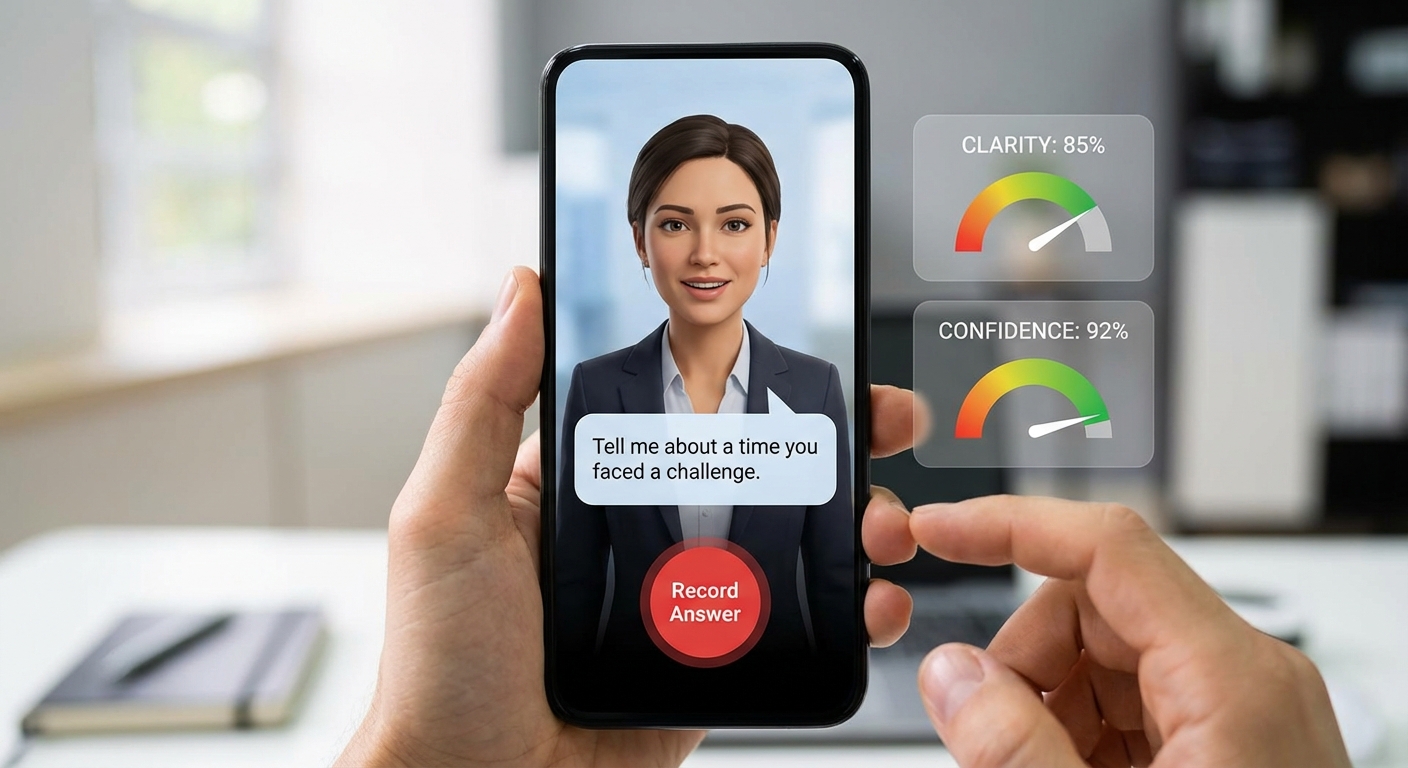
Before the camera turns on, the best way to use AI is for "deliberate practice." Interview voice ai tools allow you to speak to an AI bot that mimics a hiring manager. These tools analyze your tone, pacing, and filler words (like "um" or "uh").
Platforms like Google Interview Warmup or HeyMilo offer a safe space to fail. They provide transcripts of your answers and highlight areas where you lacked structure (such as the STAR method).
Pro Tip:
Don't just practice blindly. Use targeted questions to sharpen your skills.💡 Try Chancely's Practice Questions: Access a curated database of role-specific interview questions to challenge yourself before the real deal.
Start Practicing Now
Real-Time Copilots (The "Live" Edge)
The most controversial yet popular trend is the live interview feedback ai. These tools listen to your interview via your microphone, transcribe the interviewer's question in real-time, and generate suggested answers on your screen.
- AI powered interview assistant tools like FinalRoundAI and Interviews.chat claim to help you navigate complex behavioral or technical questions on the fly.
- Tech Specifics: For software engineers, an AI job interview assistant often includes coding copilots (like InterviewCoder) that can parse LeetCode problems from a screen share and suggest algorithms.
However, users should exercise caution. Reliance on an ai interview assistnat (a common search term despite the typo) during a live call carries risks:
- Latency: If the AI lags, your silence becomes awkward.
- Eye Contact: Reading answers off a screen is often obvious to experienced recruiters.
- Accuracy: AI can hallucinate, giving confident but incorrect technical answers.

For Recruiters: Scaling with AI
Automated Screening and Efficiency
For hiring teams, the bottleneck is often the initial phone screen. An AI screen for interview automates this by inviting candidates to record video answers to preset questions. The AI then scores candidates based on keywords, sentiment, and competency matches.
Tools for Tech Companies
AI interview tools for tech companies go a step further. Platforms like HireVue or Filtered can automatically evaluate code syntax and system design logic. This ensures that human recruiters spend time only on qualified engineers.
- Benefits: Reduces time-to-hire by up to 50%.
- Challenges: Must ensure algorithms are free from bias against accents or non-native speakers.
Key Features to Look For
When selecting a tool, whether you are a recruiter or a candidate, consider these factors:
1. Customizability
One size does not fit all. The best software offers customizable ai interview tools.
- Candidates: Can you upload your specific resume and the job description? The AI should tailor its "Persona" to match the role you are applying for.
- Recruiters: Can you adjust the scoring rubric to prioritize "Communication" over "Technical Skill" for sales roles?
2. Platform Compatibility
Ensure ai interview platform support covers the software you use. Most modern AI assistants function as Chrome Extensions or desktop overlays compatible with:
- Zoom
- Microsoft Teams
- Google Meet
- WebEx
The Ethics: Support or Cheat Code?
The rise of the AI job interview assistant has sparked a massive debate. Is using a real-time transcription tool cheating?
- The "Cheating" Argument: It bypasses the assessment of a candidate's actual knowledge under pressure.
- The "Tool" Argument: In the real world, employees use Google and AI (like ChatGPT) to solve problems. Why shouldn't they use them in an interview?
Recruiters are now beginning to use "Anti-AI" measures, such as asking questions that require personal anecdotal evidence which an AI cannot fabricate convincingly.

Conclusion
The era of the AI interview assistant is here. For job seekers, tools offering interview voice ai practice are invaluable for building genuine confidence. While live interview feedback ai offers a tempting shortcut, it requires careful usage to avoid detection and dependency.
For employers, leveraging AI screen for interview technology is no longer a luxury but a necessity to handle volume. The future belongs to those who can treat AI not as a replacement for human judgment, but as a powerful data-driven partner.