Introduction
In 2026, the job market has become more competitive than ever, with AI-driven screening and high expectations for soft skills. Successfully answering questions for a job interview is no longer just about reciting your resume; it’s about storytelling, cultural alignment, and demonstrating problem-solving capabilities.
Many candidates fail not because they lack experience, but because they struggle to articulate their value under pressure. Whether you are a seasoned professional or a fresh graduate, preparing the best job interview responses is the bridge between an application and an offer letter.

What Should You Answer in a Job Interview? The Strategy of Success
When considering what should you answer in a job interview, you must first understand the "question behind the question." Interviewers aren't just looking for facts; they are assessing your "fit." According to expert career advice from Indeed, most interviewers evaluate three things: Can you do the job? Will you love the job? And can we tolerate working with you? [1]
A comprehensive guide to job interview answers suggests that your responses should always be:
- Relevant: Tailored to the specific needs mentioned in the job description.
- Concise: Avoid rambling; a good answer typically lasts between 60 to 90 seconds.
- Evidence-Based: Use data or specific examples to back up your claims.
Top 10 Common Questions and the Best Job Interview Responses
"Tell Me About Yourself" – The Perfect Opening
This is often the first hurdle. The possible answer for job interview success here follows the Present-Past-Future model:
- Present: Brief overview of your current role and a big recent win.
- Past: How you got there and relevant background.
- Future: Why you are excited about this specific opportunity.
Handling Behavioral Questions: Best Answers During Job Interview
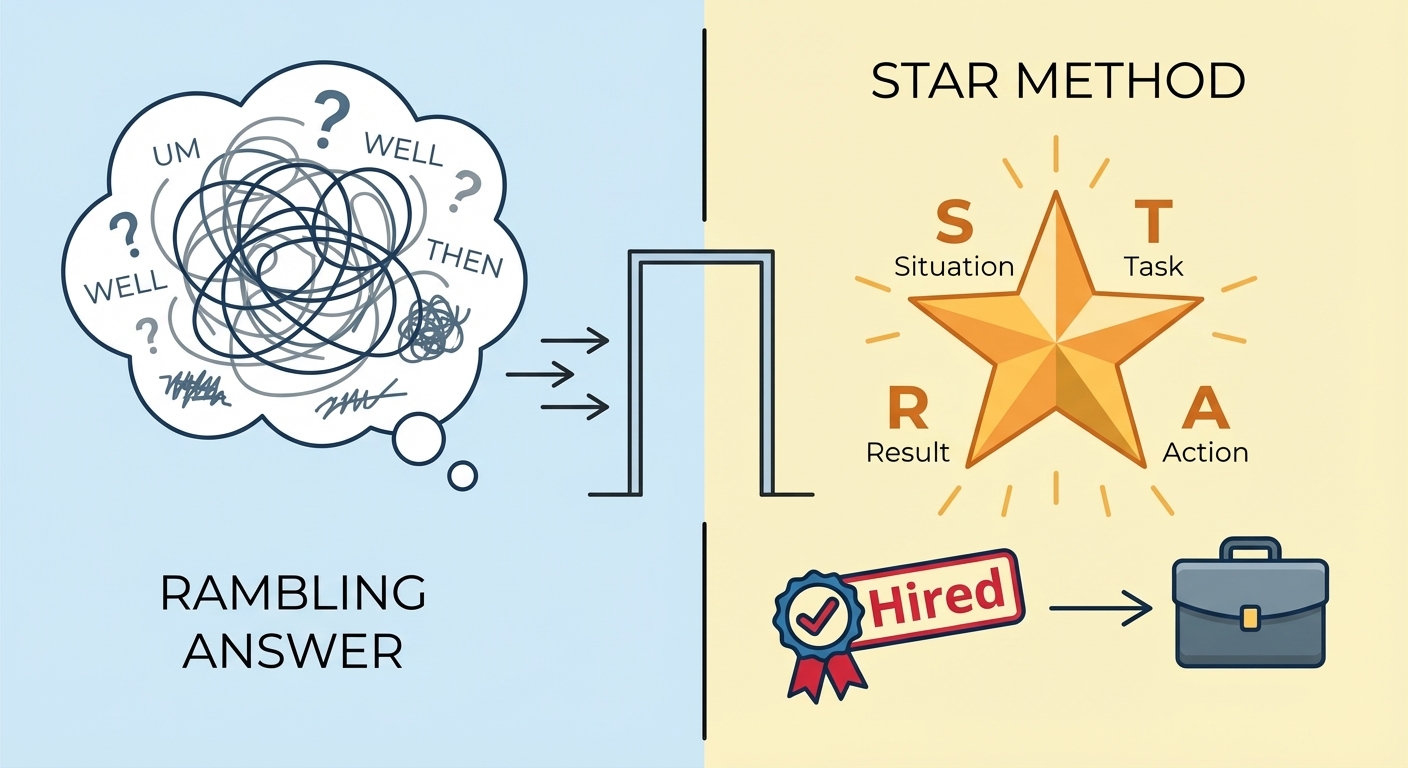
Questions starting with "Tell me about a time when..." require the STAR Method (Situation, Task, Action, Result). This structure is widely recommended by Harvard Business Review to ensure you provide a logical narrative that highlights your impact [2]. Using this method consistently leads to good responses for job interview questions because it forces you to focus on the "Result."
"Why Should We Hire You?" – Crafting Great Responses
To provide the best answer to job interview questions regarding your suitability, don't just list your skills. Instead, identify a specific pain point the company has and explain how your unique experience solves it. This transforms you from a "candidate" into a "solution."
Pro Tip:
Even the best prepared answers can fail if your delivery isn't polished. Before your big day, use an AI mock interview tool to simulate real-time pressure. It helps you refine your pacing and ensures your answering questions for a job interview feels natural and confident.
How to Answer Job Questions in an Interview: Expert Techniques
Learning how to answer job questions in an interview involves more than just the words you say. Non-verbal communication and "thinking on your feet" are crucial.
- The Power Pause: If you get a difficult question, it is perfectly acceptable to say, "That’s a great question, let me take a moment to think about that." This shows maturity and thoughtfulness.
- Acknowledge the "Unknown": If you don't know the answer to a technical question, explain the process you would use to find the solution. As noted in several Reddit career communities, interviewers often value your problem-solving logic over rote memorization [3].
- Voice Modulation: Ensure you are providing best answers in a job interview with a tone that conveys enthusiasm without sounding desperate.
Specialized Scenarios: Best Answers at Job Interview for Tricky Questions
Some questions are designed to test your honesty and resilience.
- Salary Expectations: Research market rates on sites like Glassdoor or Indeed beforehand. A perfect job interview questions answers strategy here is to provide a range based on your research rather than a single number.
- Career Gaps: Be honest but brief. Focus on what you did during the gap (upskilling, freelancing, or personal growth) rather than the reason for the gap itself.
FAQ: Answering Questions for a Job Interview
Q: What is the best answer for a job interview question?
A: The best response for job interview questions is one that connects your past achievements directly to the company's future goals. Use the STAR method to stay on track.
Q: What are good answers to give in a job interview about weaknesses?
A: Focus on a real, minor professional weakness and, more importantly, the specific steps you are taking to overcome it. This demonstrates self-awareness and a growth mindset [4].
Q: What are the best answers for job interview questions regarding "Where do you see yourself in five years?"
A: Align your personal growth with the company’s trajectory. Express a desire to have mastered your current role and taken on more strategic responsibilities within the organization.
Conclusion
Mastering the art of answering questions for a job interview is a blend of preparation and performance. By focusing on the best job interview responses—those that are structured, evidenced, and aligned with the employer's needs—you significantly increase your chances of success. Remember, every question is an opportunity to prove you are the solution the company has been looking for.
References:
[1] Indeed Career Advice: Top Interview Questions and Answers.
[2] Harvard Business Review: 10 Common Job Interview Questions and How to Answer Them.
[3] Reddit r/interviews: How are some people amazing at answering?
[4] The Muse: The Best Way to Answer "What Is Your Greatest Weakness?"