Introduction: Navigating Your Path to Success
Getting a job interview questions ready is often the most stressful part of the career journey. However, preparation is the bridge between being a candidate and becoming an employee. According to Indeed, the goal of an interview is not just to test your skills, but to see how you solve problems and fit into the company culture. By studying a comprehensive example of a job interview, you can demystify the process and build the confidence needed to stand out.
What to Expect: The Anatomy of a Modern Job Interview
When you walk into the room—or join the Zoom call—understanding what kind of questions to expect in a job interview is half the battle. Most interviews follow a structured path: the icebreaker, the behavioral assessment, and the candidate’s turn to ask questions.
Hiring managers typically look for three things: competency, enthusiasm, and "culture add." Knowing what questions they ask at a job interview allows you to tailor your narrative to meet these specific needs.

Phase 1: Breaking the Ice with Opening Job Interview Questions
The first five minutes are crucial. Most opening job interview questions are designed to help you relax while giving the recruiter a snapshot of your professional identity. The most common opener is, "Tell me about yourself."
Experts at Harvard Business Review suggest using the "Past-Present-Future" formula: briefly mention where you've been, what you're doing now, and why you're excited about this specific role.
The Core: Typical Questions in a Job Interview and Answers
To provide a realistic job related interview example, we have categorized the most frequent queries and provided structured responses.
1. "What are your greatest strengths?"
- The Strategy: Pick a strength relevant to the job description and back it up with a result.
- Example Answer: "My greatest strength is my ability to manage complex projects under tight deadlines. In my last role, I led a team to launch a marketing campaign two weeks ahead of schedule, resulting in a 15% increase in lead generation."
2. "What is your greatest weakness?"
- The Strategy: Choose a real professional weakness that you are actively improving. Coursera notes that honesty combined with a solution shows high emotional intelligence.
- Example Answer: "I used to struggle with public speaking. To improve, I joined a local Toastmasters club and volunteered to lead internal presentations, which has significantly boosted my confidence."
3. "Describe a time you overcame a challenge." (The Behavioral Question)
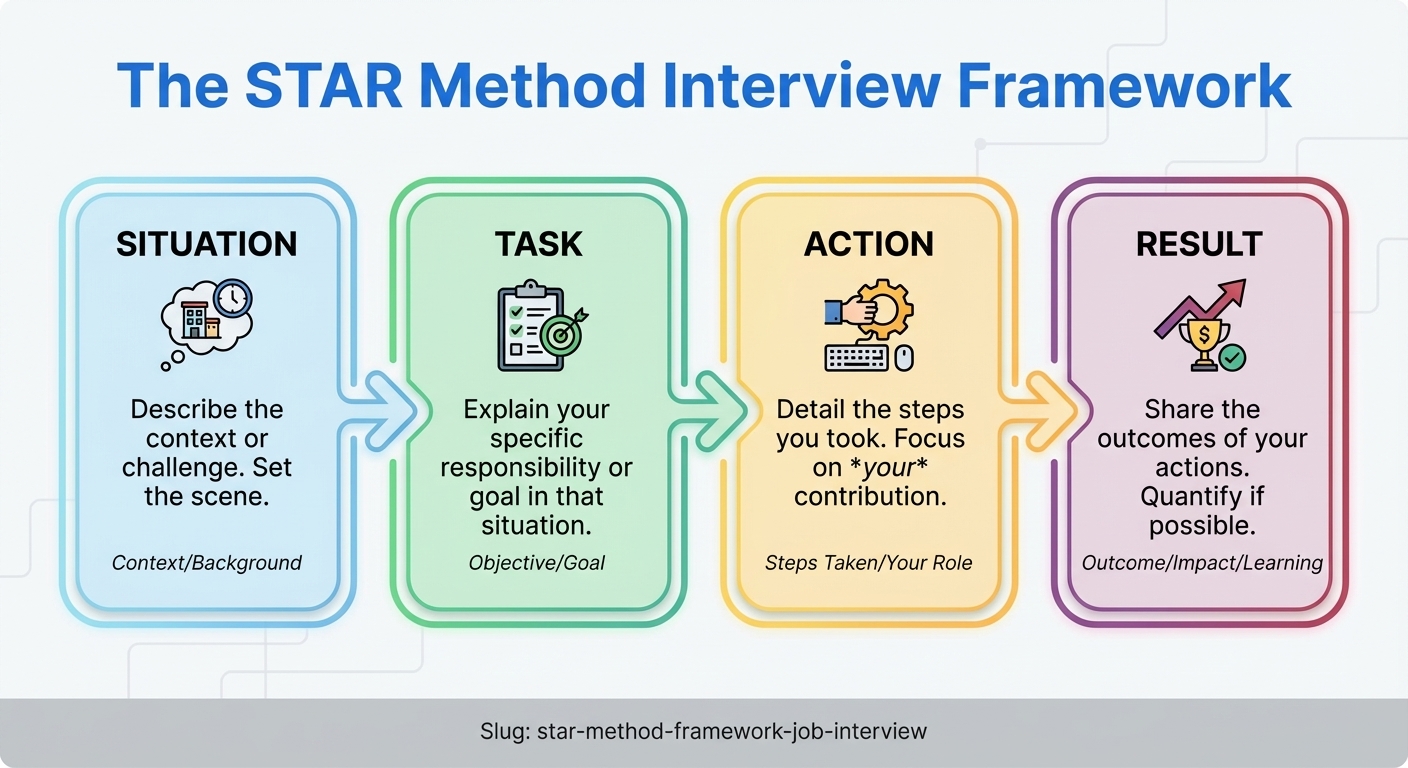
- The Strategy: Use the STAR method (Situation, Task, Action, Result) as recommended by The Muse.
- Example Answer: "We once lost a key vendor right before a product launch (Situation). I needed to find a replacement in 48 hours (Task). I negotiated with two backup suppliers and secured a rush order (Action). We launched on time without any budget overruns (Result)."
Pro Tip:
Want to ensure your answers are perfect? Use our AI Mock Interview tool to practice these scenarios in a realistic environment and receive instant feedback on your performance.
Deep Dive: Job Related Interview Example Scenarios
Depending on the industry, what questions will they ask on a job interview can vary significantly.
- For Technical Roles: Expect questions about your tech stack and problem-solving logic.
- For Sales Roles: Expect questions about your "closing" techniques and how you handle rejection.
- For Management Roles: Expect questions about conflict resolution and team development.
In every interview for a job example, the common thread is the need for specific, quantifiable evidence of your achievements.
Strategic Preparation: Question When Interview Job
The interview isn't over until you've asked your own questions. This is your chance to show you’ve done your research. When the recruiter asks, "Do you have any questions for us?", consider these:
- "What does success look like in this role after six months?"
- "How does the team handle feedback and professional development?"
- "What is the biggest challenge the department is currently facing?"
Asking a thoughtful question when interview job wrap-ups occur demonstrates that you are already thinking like a member of the team.
Conclusion: Turning the Example into Your Reality
This example of a job interview serves as a roadmap, but your unique experience is the engine. By mastering typical questions in a job interview and answers, practicing the STAR method, and preparing your own inquiries, you transform from a nervous applicant into a top-tier candidate. Remember, an interview is simply a conversation about how your skills can solve their problems. Practice, prepare, and walk in with confidence.