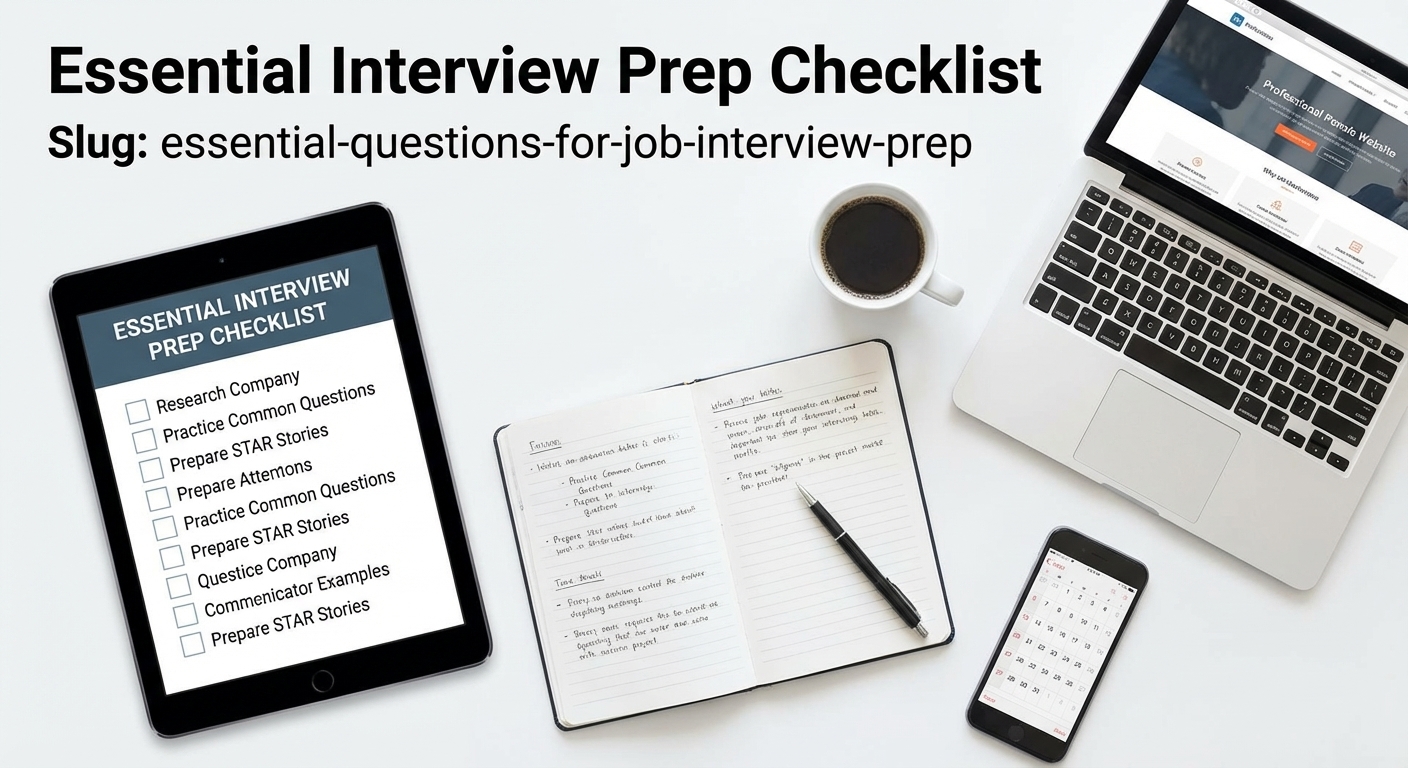
The difference between a stressful interview and a successful one often comes down to one thing: preparation. While you cannot predict every word an interviewer will say, understanding how to prepare for job interview questions and answers allows you to navigate the conversation with confidence and authority.
In this guide, we provide comprehensive job interview questions guidelines to help you transform your nerves into a polished, professional presentation.
How to Prepare for Job Interview Questions and Answers: A Framework
Preparation is more than just memorizing scripts; it is about building a repository of experiences that prove your value. According to experts at The Muse, successful candidates spend as much time researching the company as they do practicing their own stories [1].
1. Analyze the Job Description (JD)
Your first step to prepare for a job interview questions is to deconstruct the job posting. Highlight the "Required Skills" and "Responsibilities." For every requirement listed, find a specific example from your past where you demonstrated that skill.
2. The STAR Method
Most good responses to job interview questions follow the STAR method:
- Situation: Set the scene.
- Task: What was the challenge?
- Action: What specifically did you do?
- Result: What was the outcome? (Use numbers if possible).

Pro Tip:
Don't wait for the real interview to find out if your answers are effective. Use an AI mock interview to simulate the pressure of a real conversation and get instant feedback on your delivery and content.
How to Answer the 6 Most Common Job Interview Questions
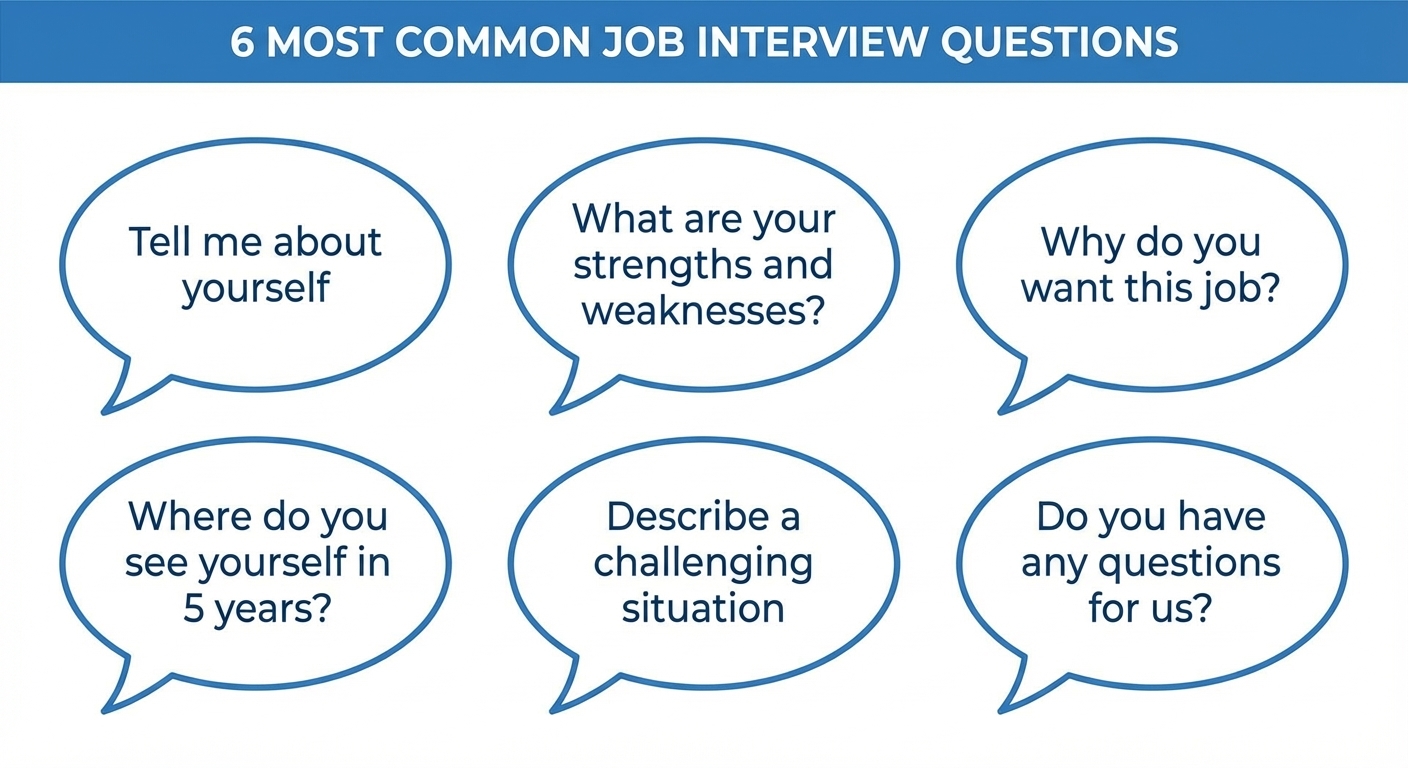
While every role is different, certain questions appear in almost every hiring process. Here is how to answer the 6 most common job interview questions based on high-authority career advice from Harvard Business Review and Indeed [2] [3]:
- "Tell me about yourself." Focus on your professional journey. Use the "Past-Present-Future" formula: what you’ve done, what you’re doing now, and why this role is your next logical step.
- "Why do you want to work here?" Avoid generic answers. Mention specific company projects or values that resonate with you.
- "What are your strengths and weaknesses?" Be honest but strategic. For weaknesses, choose a real skill you've worked to improve (e.g., public speaking) and explain the steps you've taken to grow [10].
- "Describe a challenge you overcame." Use the STAR method here to showcase your problem-solving abilities.
- "Why are you leaving your current job?" Keep it positive. Focus on "seeking new challenges" rather than "escaping a bad boss."
- "Where do you see yourself in 5 years?" Show ambition that aligns with the company’s growth. Employers want to know you plan to stay and contribute.
Strategies for Smart Answers to Common Job Interview Questions
To provide smart answers to common job interview questions, you must pivot from being a "job seeker" to a "solution provider."
- Be Result-Oriented: Instead of saying "I managed a team," say "I managed a team of 10 and increased productivity by 15%."
- Customize Your Answer: The answer and questions for job interview rounds should feel tailored. Research the company's recent news on LinkedIn to mention a current event that impacts their industry [6].
- Cultural Fit: Demonstrate that you understand the company culture. If they are a fast-paced startup, emphasize your adaptability.
Special Scenarios: Job Interview Viva Questions and Answers
In some technical, academic, or high-level executive roles, you may face a "viva" style interview. Job interview viva questions and answers are designed to test the depth of your knowledge and your ability to defend your logic under pressure.
- Expect Follow-ups: In a viva-style interview, the interviewer will likely ask "Why?" after every answer. Be prepared to go three levels deep into your technical choices or management philosophy.
- Stay Calm: If you don't know an answer, don't fake it. A smart response is: "I haven't encountered that specific scenario yet, but based on my experience with [X], I would approach it by [Y]."
Conclusion
Success in any hiring process stems from your ability to communicate your value clearly. By following these job interview questions guidelines and practicing good responses to job interview questions, you position yourself as the top candidate. Remember, the goal isn't just to answer questions—it's to start a professional dialogue that proves you are the right fit for the team.