Walking into a job interview can feel like stepping into a high-stakes spotlight. Whether you are a seasoned professional or a fresh graduate, the uncertainty of what questions do interviewers ask at job interviews often leads to unnecessary pre-interview jitters.
Preparation is the bridge between anxiety and confidence. According to research by Harvard Business Review, interviewers aren’t just looking for the "right" answers; they are evaluating your problem-solving skills, cultural fit, and self-awareness. By understanding the frequent questions on job interviews, you can transform a stressful interrogation into a productive conversation.
The Core List: Most Commonly Asked Questions in Job Interviews
There is a standard set of queries that appear in almost every hiring process. These are the most commonly asked questions in job interview settings because they help recruiters build a baseline understanding of who you are.
- "Tell me about yourself."
This is often the first question a job interviewer might ask. It’s not an invitation to recite your entire resume, but rather a request for a 2-minute "elevator pitch" of your professional journey and why you’re a fit for this specific role. - "Why do you want to work here?"
Interviewers ask this to gauge your interest in the company. As noted by Indeed, a strong answer demonstrates that you’ve researched the company’s mission and values. - "What are your strengths and weaknesses?"
This classic frequent question on job interview rounds tests your self-awareness. The key is to be honest about a genuine weakness while demonstrating how you are actively working to improve it.

Understanding What Kinds of Questions Do Job Interviews Ask
Modern recruitment has evolved beyond simple "yes or no" queries. To truly prepare, you must recognize what kind of questions they ask at a job interview based on the goal of the interviewer.
Behavioral Questions
These focus on your past behavior as a predictor of future performance. You might hear: "Tell me about a time you failed." These are common questions job interviewers ask to see how you handle adversity.
Situational Questions
These are "what if" scenarios. For example: "How would you handle a conflict with a teammate?" They test your analytical thinking and interpersonal skills in real-time.
Cultural Fit Questions
Hiring managers often ask questions they might ask at a job interview to see if you align with the team dynamic, such as: "What type of work environment do you thrive in?"
Pro Tip: Reading about questions is a start, but saying them out loud is what builds confidence. Use our AI Mock Interview tool to practice your responses in a realistic environment and receive instant feedback on your performance.
Deep Dive: Questions Regarding Experience and Goals
As the interview progresses, the questions a job interviewer may ask will shift toward your specific expertise and long-term trajectory.
- "Why are you leaving your current position?"
Always stay positive. Focus on your desire for growth and new challenges rather than venting about past employers. - "Where do you see yourself in five years?"
Employers want to know if this role aligns with your career path. Show that you are ambitious but that your goals are achievable within their organization. - Technical Skill Assessment:
Depending on your field, what questions do interviewers ask at job interviews will include specific tools or methodologies (e.g., "Walk me through your project management process").
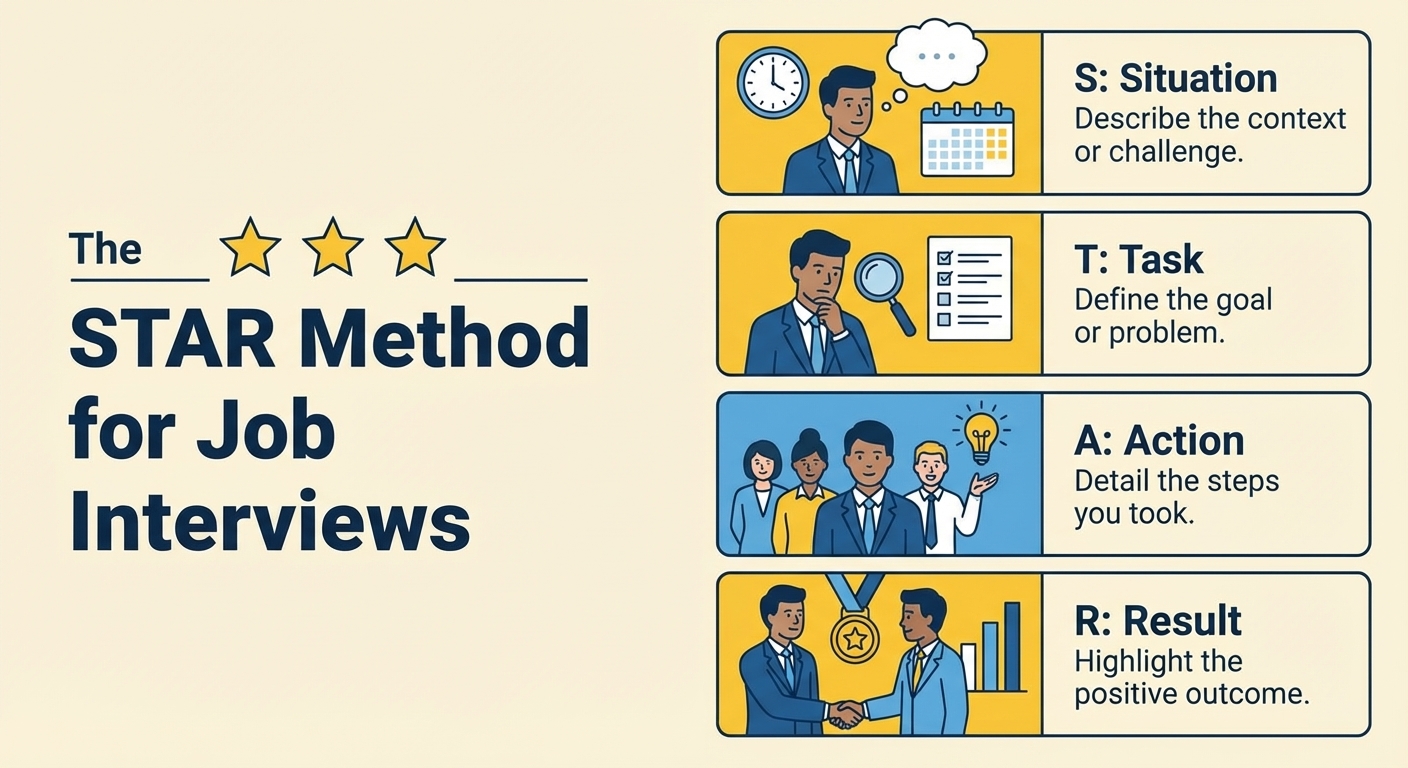
How to Structure Your Answers (The STAR Method)
When facing questions job interviewers ask, especially behavioral ones, the STAR method is your best friend. It ensures your story is concise and impactful:
- S (Situation): Set the scene.
- T (Task): Describe what you needed to do.
- A (Action): Explain exactly what steps you took.
- R (Result): Share the positive outcome or what you learned.
Using this framework helps you avoid rambling and ensures you address the core of what kinds of questions do job interviews ask.
Frequently Asked Questions
Q: What are the 5 most common questions in a job interview?
A: According to industry experts like The Muse, the most frequent questions on job interviews are:
- Tell me about yourself.
- Why should we hire you?
- What is your greatest professional achievement?
- Tell me about a challenge you've faced.
- Why are you interested in this role?
Q: How should I prepare for questions a job interviewer might ask?
A: Start by analyzing the job description to identify key skills. Then, prepare at least three "success stories" using the STAR method that can be adapted to various questions they might ask at a job interview.
Conclusion
Understanding what questions do interviewers ask at job interviews is the first step toward landing your dream role. By preparing for the most commonly asked questions in job interview settings and mastering the STAR method, you position yourself as a prepared, professional, and high-value candidate. Remember, the goal is not just to answer, but to connect your experience to the company's needs.